
BARIFA Hosts Presentation on Climate and Ocean Circulation by UK Scientist Dr. Ben Moat
Press Statement – 16 May 2026
Dr. Ben Moat, Physical Oceanographer at the United Kingdom’s National Oceanography Centre (NOC), delivered a presentation on Wednesday, 13 May 2026, at the Bahamas Alrae Ramsay Foreign Service Institute (BARIFA).
The presentation was coordinated by officers of the Maritime and Ocean Affairs Bureau (MOAB) of the Ministry, including Ms. Kimberley Lam, Head of MOAB; Foreign Service Officers Ms. Cidney Thompson and Mr. Joel Brown; and Dr. Brandon Bethel, Assistant Professor of Marine Sciences at the University of The Bahamas (UB). Attendees included representatives from key national agencies with responsibility for ocean affairs, including the Royal Bahamas Defence Force and the Departments of Environmental Planning and Protection, Marine Resources, and Meteorology. Also in attendance were Foreign Service Officers from other Bureaus within the Ministry, as well as students enrolled in Dr. Bethel’s Oceanography course at the University of The Bahamas.
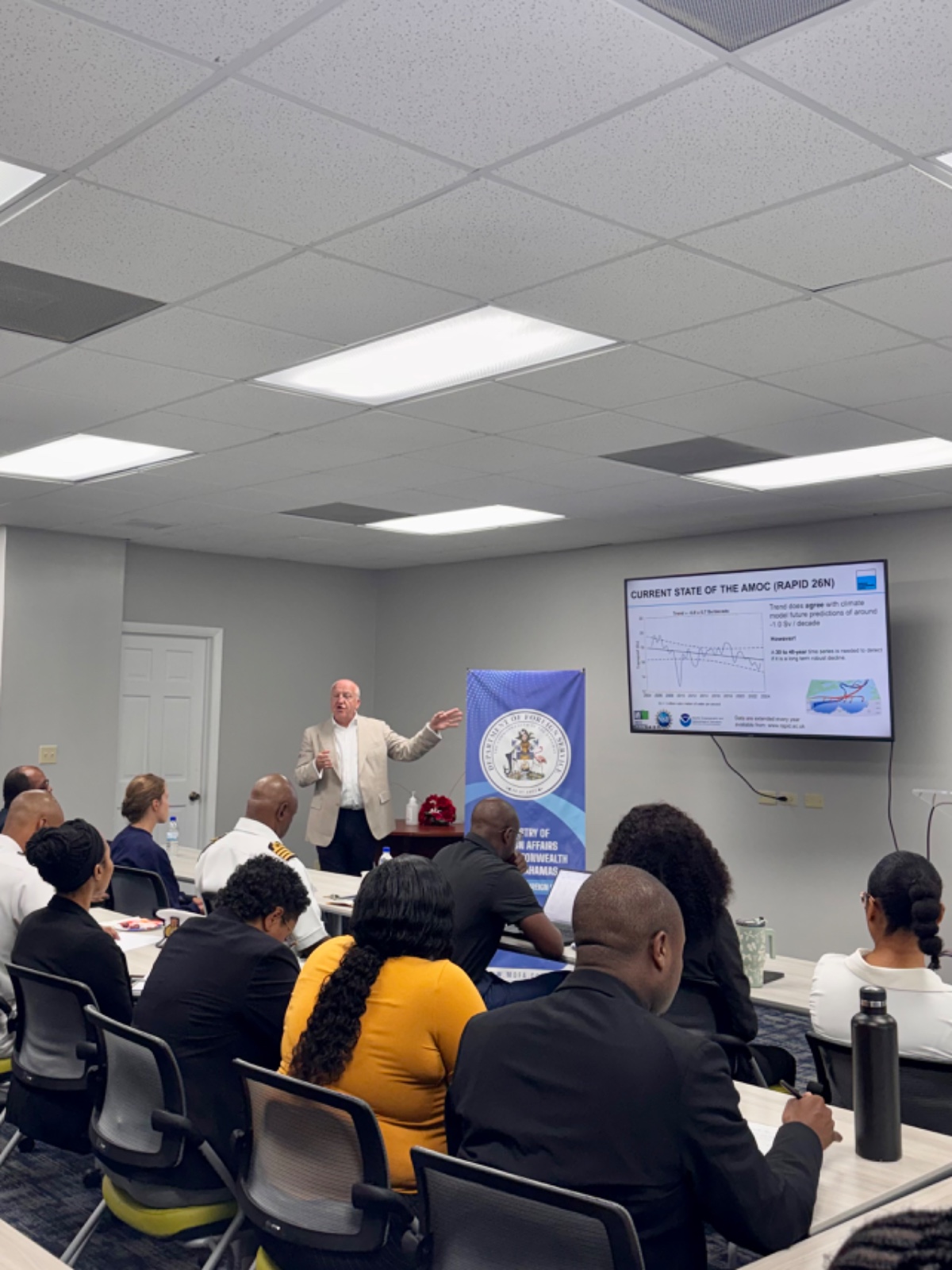
Dr. Moat’s presentation focused on the Atlantic Meridional Overturning Circulation (AMOC), a major system of Atlantic Ocean currents that plays a critical role in regulating ocean temperatures, influencing sea levels, and transporting warm waters that sustain marine ecosystems. He began by underscoring the central role of the ocean in the global climate system and highlighting the adverse impacts of climate change, including ocean warming and acidification driven by greenhouse gas emissions, as well as the growing threat of ocean pollution. Dr. Moat then provided an overview of the AMOC, outlining its functions, methods of observation, its current weakened state, and projected future changes.
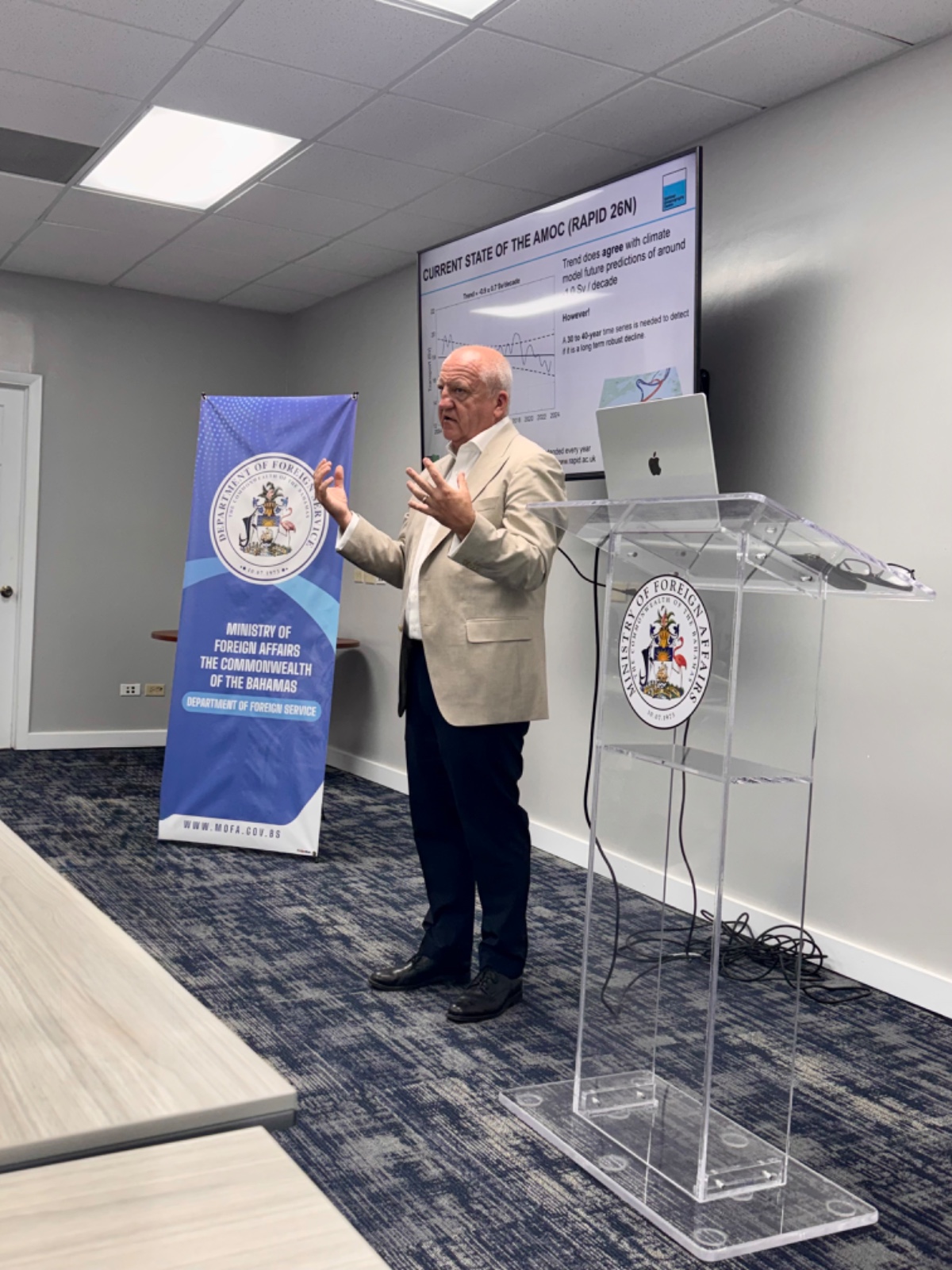
Dr. Moat also serves as a principal scientist for RAPID, a joint ocean‑observing programme between the National Oceanography Centre and the United States’ National Oceanic and Administration (NOAA). In this capacity, he described the collaborative research undertaken by the NOC in Bahamian waters and the surrounding region to monitor the AMOC. He emphasized the importance of strengthening linkages between the RAPID programme and research efforts conducted by Bahamian agencies to enhance understanding of ocean–climate interactions and the societal impacts of ocean change.
Following an engaging question‑and‑answer session, Dr. Moat expressed appreciation to The Bahamas for its continued support of AMOC observations, noting that such monitoring is essential for assessing and managing risks to livelihoods arising from a weakening circulation. This support is particularly critical for The Bahamas as a low‑lying archipelago located near the path of the Gulf Stream, making the country especially vulnerable to the impacts of AMOC weakening, including accelerated sea‑level rise and increased hurricane intensity.
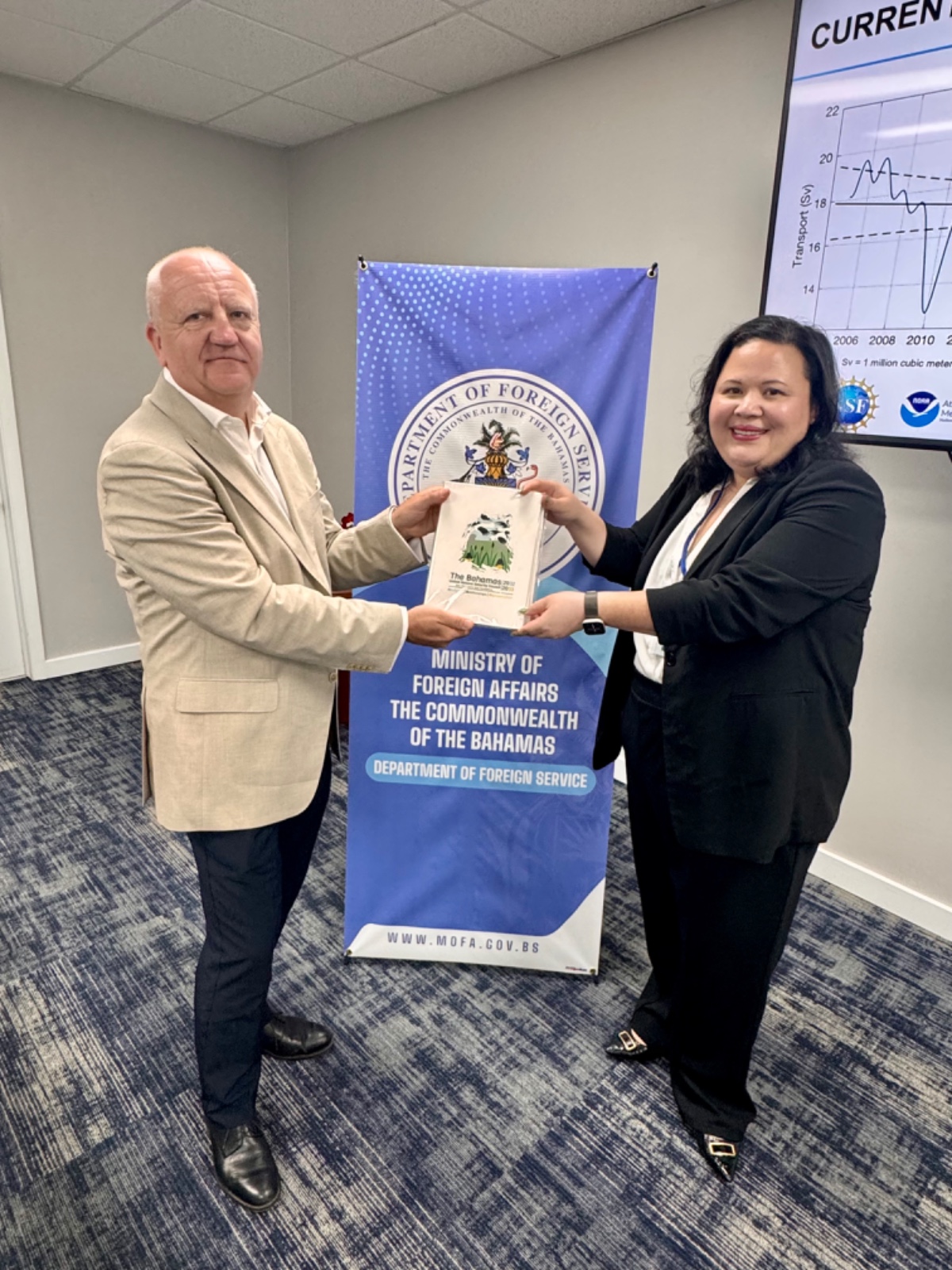
L to R: Dr. Ben Moat and Kimberley Lam